BEreadyness in collaboration
Collaborative preparedness is an initiative that will last for one and a half years, starting in the fall of 2025. The initiative will lead to increased local preparedness and increased preparedness cooperation.
We organize three workshops on the theme of preparedness in seven municipalities; Katrineholm, Gnesta, Strängnäs, Flen, Eskilstuna, Vingåker and Nykvarn.
A larger preparedness meeting will be held in the fall of 2026.
It is possible to apply for small grants of SEK 5,000 - SEK 24,000.
Collaborative preparedness is an initiative that will last for one and a half years, starting in the fall of 2025. The initiative will lead to increased local preparedness and increased preparedness cooperation.
We organize three workshops on the theme of preparedness in seven municipalities; Katrineholm, Gnesta, Strängnäs, Flen, Eskilstuna, Vingåker and Nykvarn.
A larger preparedness meeting will be held in the fall of 2026.
It is possible to apply for small grants of SEK 5,000 - SEK 24,000.
Meeting no. 3
Meeting no. 3 is now being planned in full.
We have some dates ready. You are welcome to register already now. We will be working on preparedness issues, but what exactly the evening will contain is being planned in full.
Do you have questions? Then email to theres.botold@leadersodermanland.se
- Municipality of Flen
When: 10 November 17.30 – 20.30
Place: Flens library - Strängnäs Municipality
When: 24 November 17.30 – 20.30
Place: The Arsenal
Our big preparedness meeting
It was held on September 5 in the Paulinska Hall, Strängnäs. The 65 participants who were present got to hear Klaudia's story about what it was like when the war broke out in Ukraine. Sven-Olov talked about his summer place where he was when the big fire in Västmanland broke out.
The participants got to discuss how they themselves would handle a crisis if it were to occur. How would one react and act? What do you need to get through a crisis? The workshop part was led by Lars Brånn, who calls himself a crisis nerd and knows the subject well.

Meeting 2. Prepared together – registration
We are meeting again, this time with a focus on how we handle a crisis once it hits. We are starting from a specific crisis scenario, we are using the material from meeting no. 1 on what the local community can contribute in the event of a crisis.
We also receive visits from local emergency response actors.
We also welcome those of you who missed the first meeting.
We offer food!
Completed meetings
Meeting 3 Katrineholm Municipality – 20 October 2026
Meeting 3 Vingåker Municipality – 13 October 2026
Our big meeting – September 5, 2026
Meeting 2 Eskilstuna Municipality – August 18, 2026
Meeting 2 Nykvarn Municipality – May 18, 2026
Meeting 2 Vingåker Municipality – May 5, 2026
Meeting 2 Katrineholm Municipality – April 21, 2026
Meeting 2 Strängnäs Municipality – March 31, 2026
Meeting 2 Gnesta Municipality – March 26, 2026
Meeting 2 Flen Municipality – 25 Feb 2026
Meeting 1 Eskilstuna Municipality – March 19, 2026
Meeting 1 Nykvarn Municipality – 3 Feb 2026
Meeting 1. Vingåker Municipality – 21 Jan 2026
Meeting 1. Flen Municipality – 3 Dec 2025
Meeting 1 Strängnäs Municipality – 25 Nov 2025
Meeting 1. Gnesta Municipality – 17 Nov 2025
Meeting 1. Katrineholm Municipality – 29 Oct 2025
Collaborative preparedness – what is it all about?
We bring together local stakeholders to think together about preparedness, instead of each one individually. With the local community as a starting point, we explore how we can collectively increase preparedness where we live and work.
What will happen?
Planned activities
We invite you to inspiration days and workshops held in each municipality in our area.
- Workshop 1: Emergency preparedness workshop
- Workshop 2: Prepared together
- Workshop 3: Conclusion and continuation
- Theme day: A larger theme day around preparedness where the entire area can participate.
- Small grants: They range from SEK 5,000–24,000. More information below.

Contact person
Theres Botold
theres.botold@leadersodermanland.se
072-742 12 61

Application small support – preparedness
Do you have an idea that can strengthen your local community's preparedness?
We offer financial support for small projects in emergency preparedness, so you can turn your ideas into reality.
Small grants provide the opportunity to develop concrete initiatives and are based on
SEK 5,000–24,000.
The project must lead to a lasting result, which could be:
- new permanent meeting places (e.g. new meeting rooms)
- new operations/activities (e.g. new and recurring emergency preparedness events)
- new methods or ways of working (e.g. local emergency plan)
- new service solutions (e.g. defibrillator)
- new emergency networks (e.g. cultivation networks)
The project must have a public benefit purpose and be new to the location. It cannot only benefit an individual association or company.
It is required that at least two organizations collaborate and carry out the activities in the project.
The application must be submitted to Leader Södermanland before the project starts. Support can only be granted to projects that would not be carried out without funding from Leader.
The support is paid against reported and paid costs. This means that you need to be able to afford the money during the course of the project.
You need to contribute with voluntary work equivalent to the same amount of support you are applying for. Voluntary time is valued at:
- 340 SEK/hour for people over 16 years old
- SEK 77/hour for young people between 13 and 15 years old.

Deadlines – application for small grants
- August 6
- August 26
- September 23
- October 20
- November 18
Contact person for small support

What can the local community contribute?
A compilation of all ideas from participants in the project.
Tips and ideas
Prepared Villages – Gnesta, Flen, Katrineholm & Vingåker
Is your community interested in making a local emergency plan? Contact:
- Project manager: Lovisa Segersvard, lovisa.segersvard@sv.se
- Department Head: Eva Humble, Phone: 070-536 04 70, eva.humble@sv.se
The aim of the project is to strengthen local preparedness in rural areas through inventory, training, networking and coaching. The work will lead to local preparedness plans for the countryside.
The Prepared Villages project is being implemented in Vingåker, Gnesta, Flen and Katrineholm.
The project owner is the Sörmland Adult School Study Association, which collaborates with the Sörmland District of Bygdegårdarnas, Sörmland's Local Heritage Association, Hela Sverige ska leva Sörmland, the Civil Defence Association and the municipalities of Flen, Gnesta, Vingåker and Katrineholm.
Read more about the project here: https://www.sv.se/avdelningar/sv-sormland/projekt/beredda-bygder
Study circles and arrangements within preparedness


Student Association Adult School
Information about study circles and ready-made plans can be found on the Swedish Adult Education Association's website:
Existing arrangements
- The village's preparedness – A guide for those of you who, together with others, want to learn about preparedness and how you and your association can be part of local preparedness.
- Preparedness – the community center, a hub for crisis preparedness based on how the local community center can be used during a crisis.
- Preparedness for rural businesses is about farm-level preparedness and local collaboration.
- My preparedness is aimed at people with intellectual disabilities and is based on every individual's right to protection, information and proper support in times of crisis and war.
Study promotion
Information about study circles and ready-made plans can be found on the Studiefrämjandet website:
https://www.studieframjandet.se/
Interested in a study circle about cultivation in Södermanland, contact
Lena Wistrand 016-159323 lena.wistrand@studieframjandet.se
Existing arrangements
- Contingency cultivation – This study plan from the Swedish Blue Star and Studiefrämjandet is a first step towards strengthening your and others' food security through cultivation.
- Co-cultivation – The purpose of the study circle is to give you and your group tools and inspiration to start, or further develop, a collaborative cultivation that lasts over time.
Strong parish

Strong Parish is an example of regional work where civil society is involved in preparedness efforts.
It is a Gotland initiative aimed at strengthening local preparedness at the parish level by mobilizing residents, associations, and local actors. The project is based on the idea that each parish is its own local community with unique conditions, and that preparedness becomes stronger when built close to people and places.
The project works to: create local preparedness groups in each parish, develop local preparedness plans based on the parish's resources, risks, and needs, map local resources (facilities, equipment, skills, volunteers), strengthen collaboration between civil society, associations, businesses, and the municipality, raise knowledge and engagement through meetings, training, and dialogue, and increase the resilience of the local community through practical measures and local solutions.
Ongoing small projects
BEmergency preparedness day in Baggetorp

The emergency preparedness day organized on April 19 is the first step in a long-term effort to prepare for emergencies in the village. The day was organized by Baggetorps Bygdegård and Baggetorps Sports Association.
The preparedness day was conducted without financial support from Leader.
More information about the initiative
How did they proceed?
- Initiative. It all started at the first emergency preparedness meeting in Vingåker. A working group was created that held regular meetings after the meeting, during the first period they met once a week.
- What do they want to achieve?. The working group has drawn up a long-term plan for emergency preparedness in the area. They are working to make Baggetorp community center a safety point/emergency hub. They also plan to develop a local emergency plan with support from the Adult Education Association.
- Step one – preparedness day. As a first step, the working group chose to organize a preparedness day in Baggetorp. To make the day suitable for everyone in the village, regardless of prior knowledge and life situation, a broad program was created. There would be activities for all ages, so that as many people as possible could participate.
- Participating. With the help of local contacts, several emergency response actors in the area were linked to the day.
- Vingåker Civil Defense Association
- Björkvik Volunteer Fire Department
- CIP from the neighboring village of Marmorbyn
- The blood center from Kullbergska Hospital
- Vingåker Municipality's security strategist Nicklas Adamsson and rural development developer Elin Östensson.
- Financing. The local contacts were valuable.also for financing the day. ICA Maxi in Katrineholm and Coop Norr acted as sponsors. The preparedness day was therefore not financed by Leader.
- Marketing – door knocking: In addition to the regular marketing, the working group chose a different method to reach out. They knocked on the doors of all the residents of Baggetorp so that they would receive a personal invitation. They divided the area between them, so that everyone was responsible for a number of homes each. This was very valuable. It was an opportunity to meet all the neighbors in the area.
- Success factors: Around 100 people came to the preparedness day, which is really good considering that the village has 600 inhabitants. The working group itself believes that the success factors were the broad program and the door knocking.
- Lessons learned: Next year the program will be shorter. The program made it possible to come both in the morning and in the afternoon, but it would have been better to concentrate the activities, they note.
Österåker Community Gardening

The project creates a community garden in Österåker that functions as a local meeting place for gardening, learning and preparedness. Children, adults and the elderly participate together and build a gardening network that strengthens the social and practical robustness of the village.
A piece of unused lawn at the school is being used for community gardening. The school will be able to use the gardening in teaching.
More information about the project
- Initiative.The parish council, the school and villagers are implementing the project together. The initiative comes from Nina Persson who is involved in the parish council.
- General meeting & planning group. The parish council invited everyone interested in the area to a larger meeting. At the meeting, a planning group of seven people was appointed. They met regularly thereafter.
- Anchoring students. The students' ideas were integrated into the design. They were given the opportunity to have their say on what should be grown and what the surroundings should look like.
- Preparation of cultivation and community areas. Ongoing during spring and summer. Land preparation and installation of fences. Installation of water solution. Construction of certain common areas, e.g. pallet sofa, barbecue area, cozy corner. Purchase of materials such as tools, seeds and teaching materials. Establishment of cultivation areas and start of the growing season.
- Working days. During the season, work days are held once a week, with the participation of the planning group, interested students and villagers.
- Workshops. During the season workshops are held within cultivation and preparedness.
- Creation of a local cultivation network. Ongoing
- Long-term planning. The planning group assumes that the cultivation will be an annual event. This requires a plan for long-term operation and management. During the summer holidays, they have an irrigation schedule, and in their free time they also help with the irrigation. A harvest festival is planned for the autumn.
Our safe road association – small grants

The majority of the members of the Björndalen-Hornuddens road association are 60+, which means that the risk of cardiac arrest, accidents such as falls is high.
The aim of the project is to save lives in the area by providing first aid training and installing defibrillators. Along the road is also Hornuddens Garden, which is a well-visited destination, so the project also benefits these visitors.
The work as a whole consists of two defibrillators and two training courses. It is divided into two parts, where Leader finances one defibrillator while the road association itself finances the other.
The Skirk Source
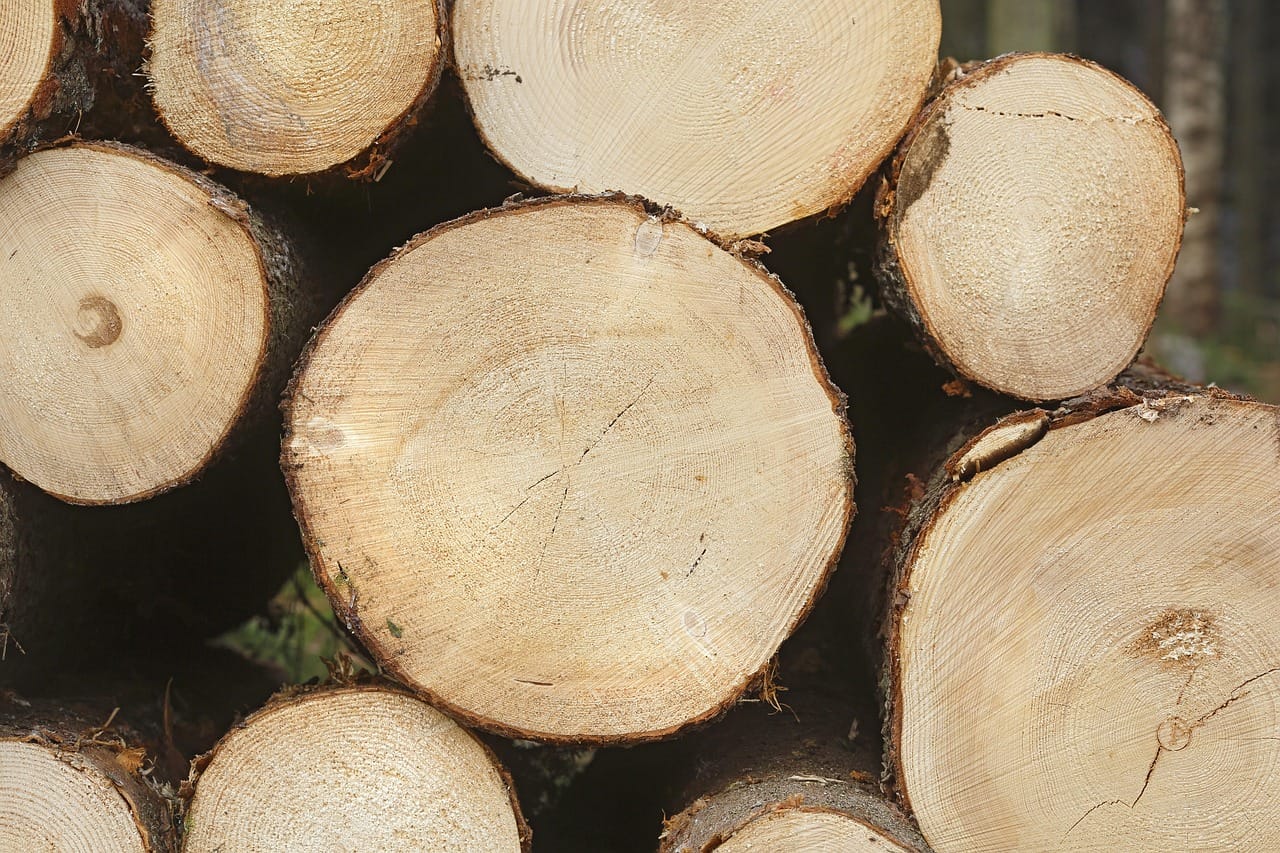
Access to clean water is a central part of the community's crisis preparedness. The project will prepare the water source Skirkällan in Lerbo. Today, it is not possible to reach the skirkällan as dead trees lie scattered on the ground.
By clearing, making accessible, and informing about the source, the project aims to strengthen local preparedness while preserving a culturally and historically valuable site.
Preparedness nuts

The project will create a long-term and vibrant preparedness resource by getting more people to plant and propagate large-fruited hazel.
Everyone involved in the project receives 3 hazel bushes for free, but with the requirement that they need to propagate each plant into two new plants and give them to someone else, who in turn needs to do the same. An agreement will be made with the participants in the project.
Prepared in Björkvik
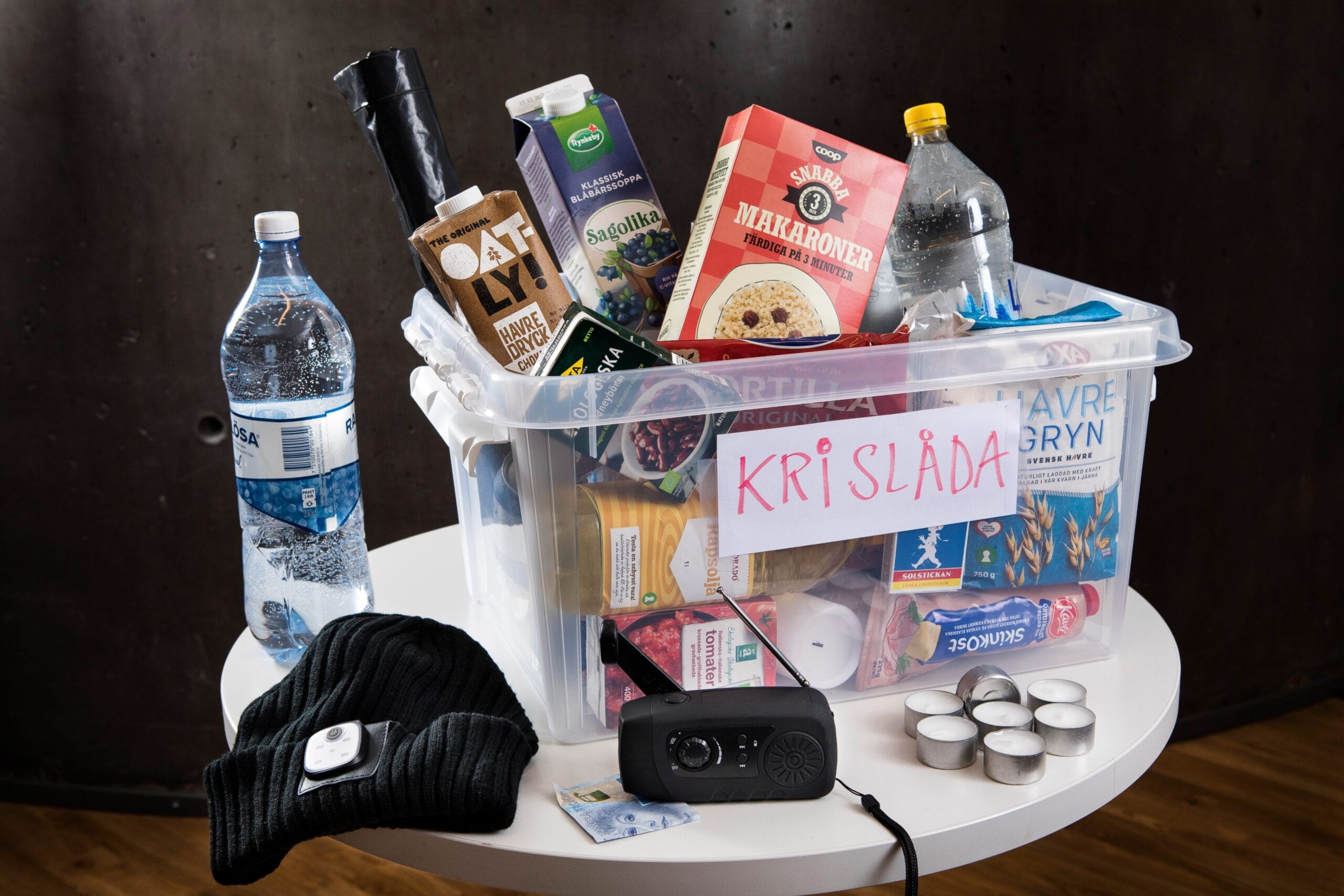
The project will implement a preparedness component within the already established event Glindrandagen in Björkvik. The purpose of the project is to raise preparedness in the local community so that they can better handle the initial phase when a crisis has occurred.
This mini-project is based on utilizing already existing local resources,for example, to create crisis boxes, to test using a generator, for cooking, etc.
Safer Together
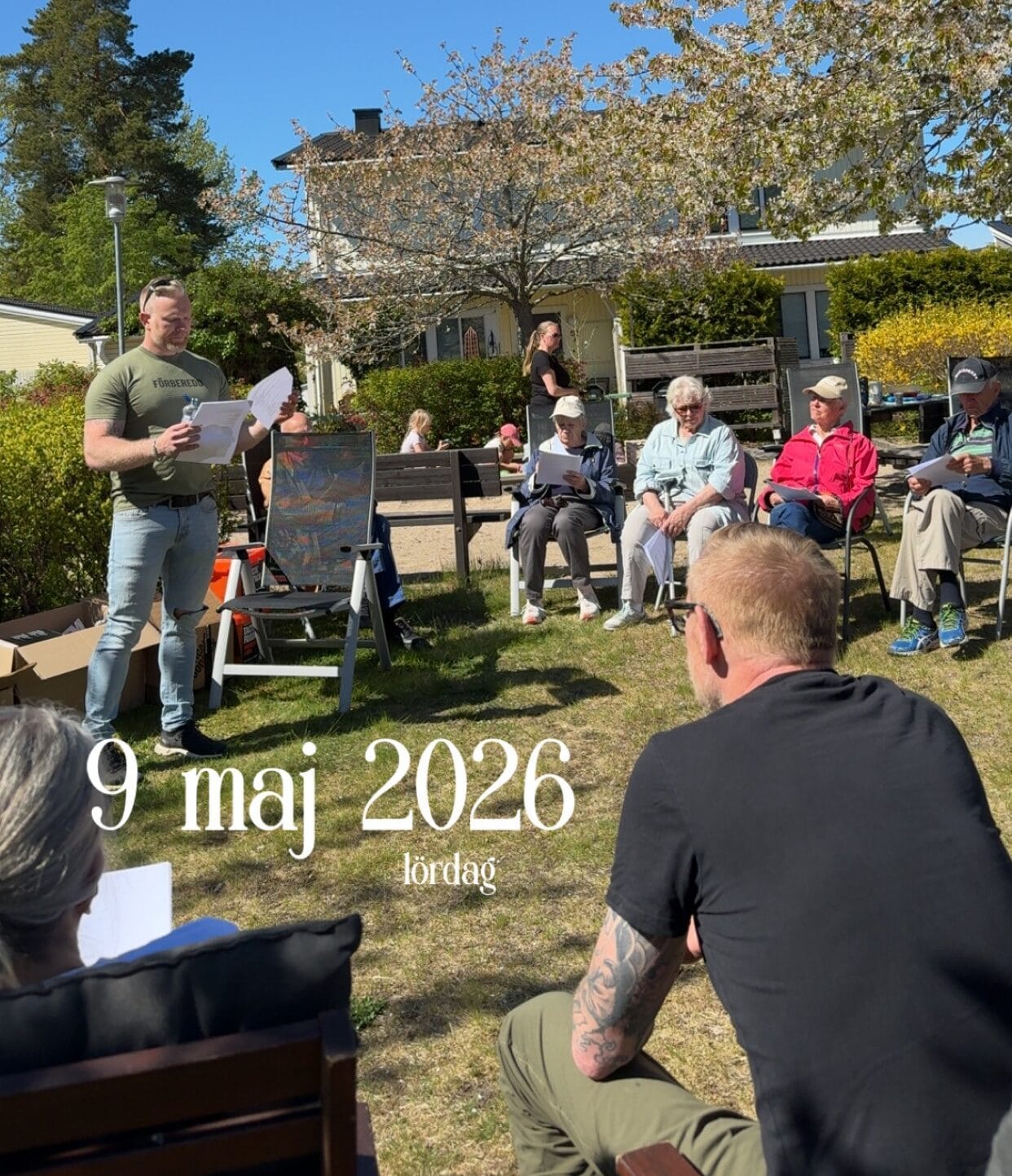
Safer Together is a local preparedness initiative that gives neighbors the opportunity to strengthen their crisis preparedness through practical exercises, community and collaboration.
We will be safer together. a model/process for Neighborhood cooperation 2.0 that can be applied in areas/villages to increase community, collaboration and household preparedness.
More information about the project
How do they proceed?
- Initiative. The idea comes from Björn Pettersson. He felt that there was a need to increase preparedness and strengthen ties in the neighborhood where he lives, that neighborhood cooperation in the area becomes more than a sign.
- Collaborations. With the basic idea as a starting point, Björn contacted neighbors and stakeholders who might be interested in participating in the project. In addition to the community, where he himself lives, he soon got the Strängnäs Volunteer Resource Group (FRG) and the Strängnäs Scouts on board.
- Design. A project plan and budget were drawn up. The costs of the project are exclusively the equipment purchased. All materials and equipment purchased in the project will be available to the neighboring area after the end of the project. The community is responsible for storage. Materials and equipment consist of emergency kits, heating blankets, first aid kits, emergency kitchens, water canisters, emergency radios, etc.
- Implementation. The project includes meetings on the following themes:
- The power goes out - practice 24–48 hours without electricity Residents test communication, share resources and practice coping, how do you ensure electricity supply with a power plant?
- Water loss in the area - Scenario and common problem solution regarding water supply, how does a water filter work?
- Safety walk & emergency preparedness evening - Map resources, meeting places and local risks.
- Communication exercise-Testing of text message chains, analog methods, crank radios and walkie-talkies.
- Conversation evenings & community meetings - Build trust and plan upcoming activities.
- Fire in the area - scenario exercise - Practice assembly point, information dissemination and safety checks.
- Emergency kit – Review of what should be at home and in the car.
- Food supply and materials – Focus on how a household can manage 7 days without support.
- Home healthcare - What is appropriate to have at home in case of injury?
- Method. Ultimately, all of this is compiled into a method/program that can be used in other communities.
Defibrillator Forssagården
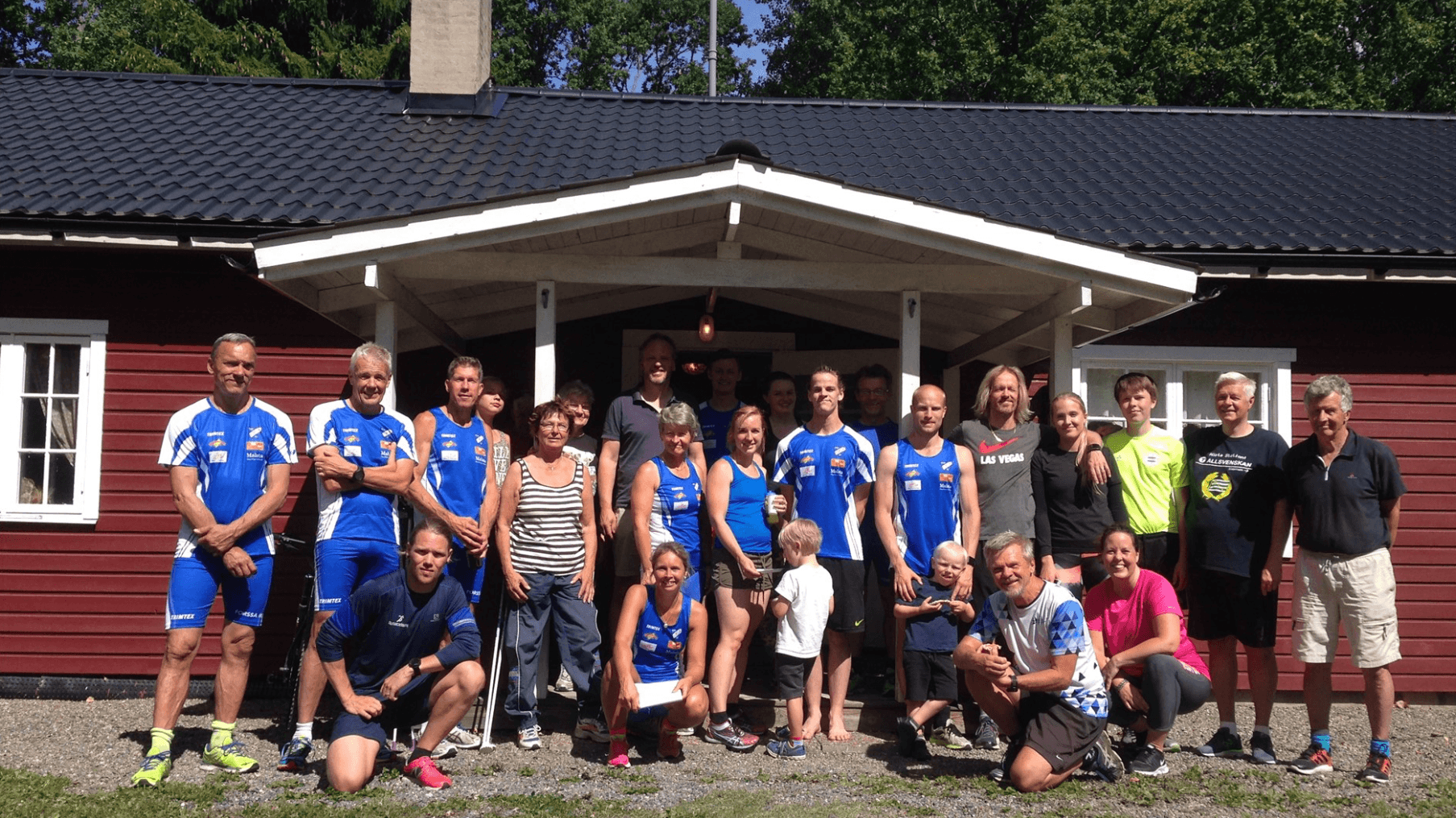
Forssa IK is conducting a feasibility study aimed at developing Forssagården into a central meeting place in Forssa Flen. The work involves the entire community, such as associations, the church, hunting teams, residents, and the growing number of seasonal and weekend residents.
An important part of the work involves increasing preparedness and eventually designing a preparedness hub at the location. As a first step in this work, they are acquiring an AED and conducting training in CPR.
Many of the association's members are now over 60 years old, and as they are now connecting new partners to the location from the church, hunting teams, and the public, a large number are over 60.
Are you ready Stallis?
The project teaches about preparedness and how individuals can prepare for a crisis situation that may arise in connection with war, power outages, or climate change.
Within the project, a volunteer group is formed that we call the ”Stallis group,” which works primarily with preparedness cultivation and food supply.
The project consists of an information meeting about home preparedness on a broad front.
Shortly after that, the ”Stallis group” gathers for an information meeting and workshop with the theme of cultivation and food preparedness.
The Stallis group will then create a plan for the group's work in the coming year.
More examples of small projects
More good examples of small projects within preparedness can be found on the Leader Sjuhärad website.

About the project
Collaborative preparedness
Leader Södermanland has conducted a feasibility study in preparedness that shows that the local community's preparedness capacity needs to be strengthened. Here there is a great opportunity to utilize the power and expertise that civil society possesses.
In the fall of 2025, we will therefore start a preparedness project where associations, companies and other local actors are given the opportunity to collaborate and create a preparedness workshop. We will also investigate long-term forms of collaboration within preparedness work that involve civil society at the local level.
Civil society is a resource
How can the local community contribute to strengthening preparedness?
Several examples of preparedness issues have been highlighted in the feasibility study – and more will emerge, together with you in the local communities. Here are some ways you can contribute:
- Contribute to increased home preparedness.
- Contribute to increased preparedness in condominiums, rental apartments, and community associations.
- Assembly room in case of crisis.
- Provide equipment and materials.
- Contribute to increased security, for example through; CIP groups, FRG, neighbor cooperation, night walks and other security-creating measures.
- Create action plans for local preparedness.
We collaborate on the project


Contact
Emergency meetings
Theres Botold
theres.botold@leadersodermanland.se
072-742 12 61
Small grants and administration

